My brain can be a bit impulsive, especially with things related to crafting. I’m not sure I remember what originally kicked it off, but I recently went down a rabbit hole learning about book binding.
I started with a mini kit courtesy of Beal, a friend in the Canton of Aston Tor and their current Arts & Sciences Officer. She assembled the kits using index cards, thread and covers made from scrap cardboard and fabric.
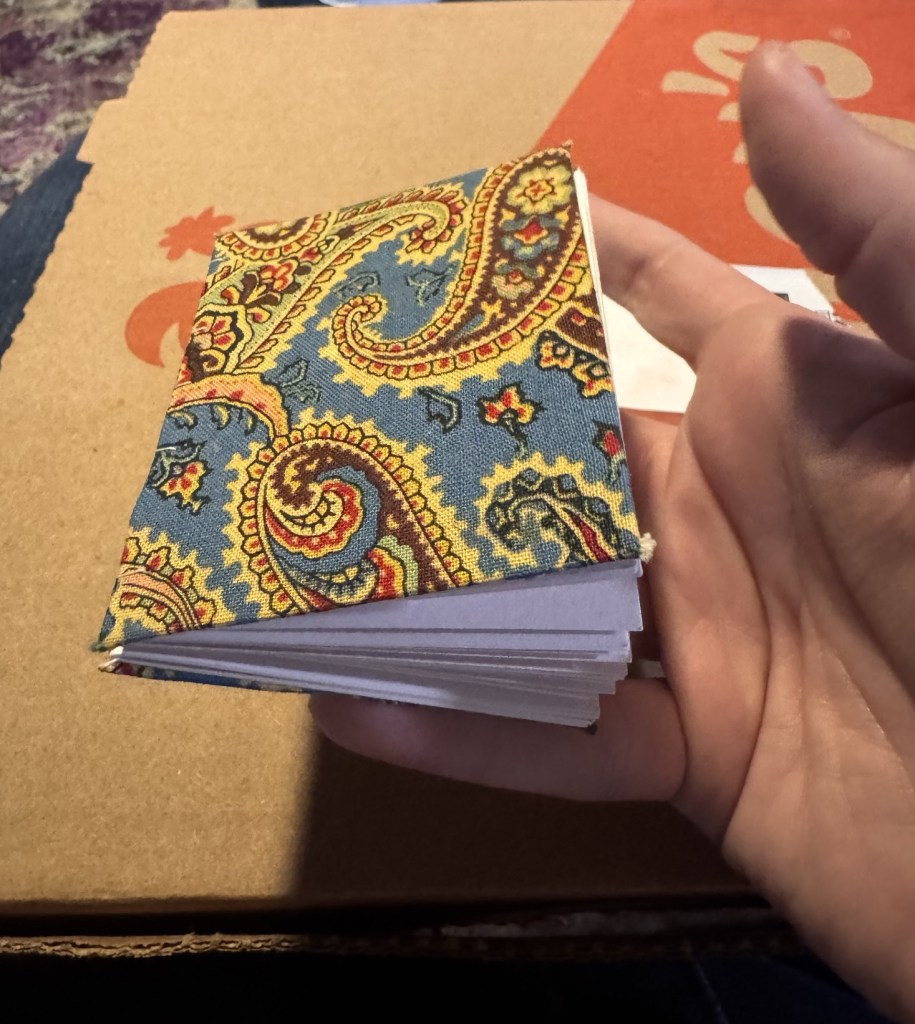
Books have been bound with Coptic Stitch (also called “chain stitch”) since the 2nd Century C.E. The stitch is exposed along the spine of the book, whose other key feature is its ability to lay flat when opened.
While I’ve seen some absolutely stunning cased (most commonly seen in modern hardback books) projects, I have been mostly drawn to the visibly stitched books so far.
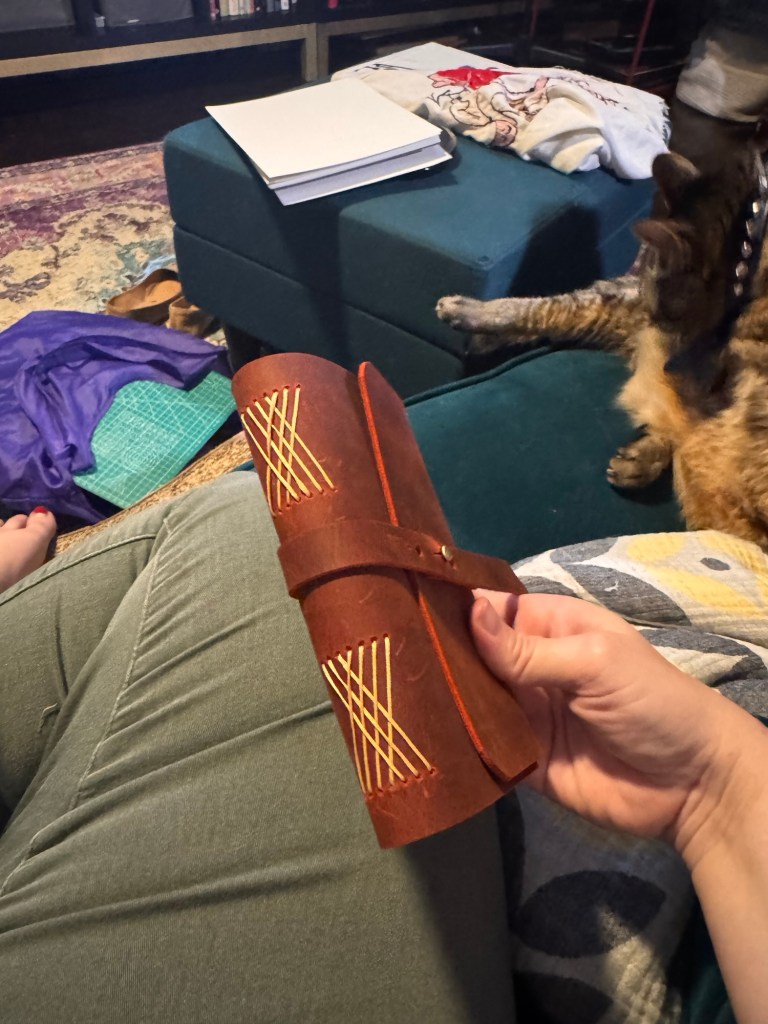
When I made a post on Facebook about my new crafting hyper focus, Duchess Issi reached out and asked if I wanted a project to work on. I always enjoy learning when I have a solid project to focus the energy on, so I accepted the task of making some vigil books for Meister Joachim Courtenay der Marxbruder’s elevation to the Order of the Mark.
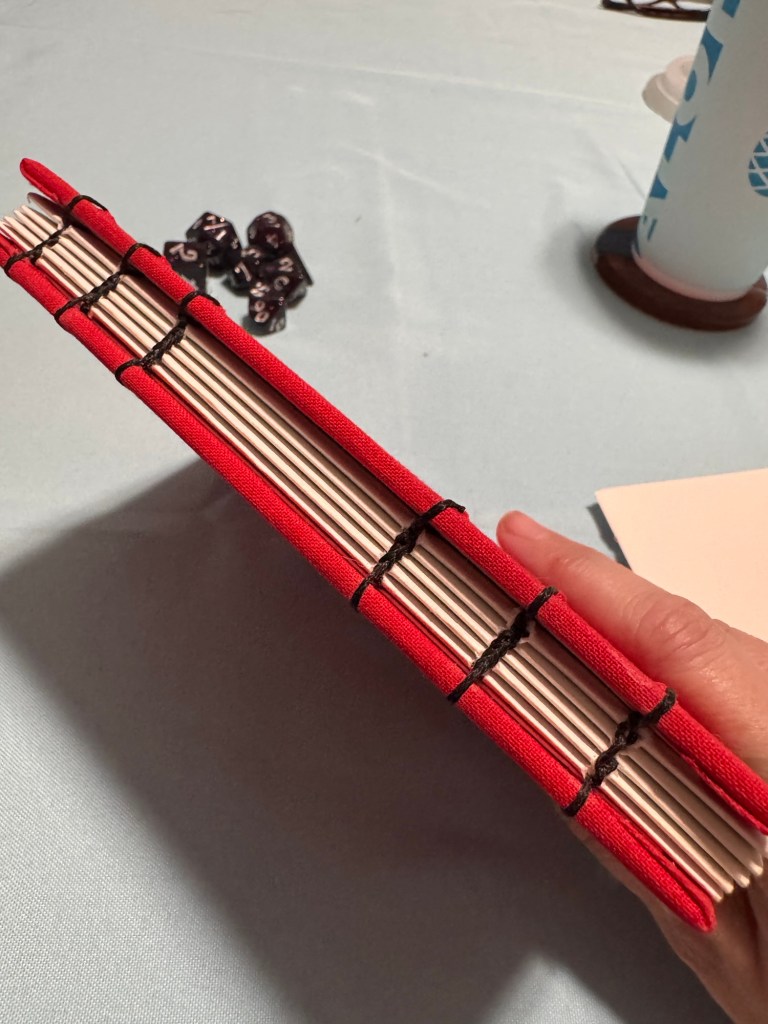
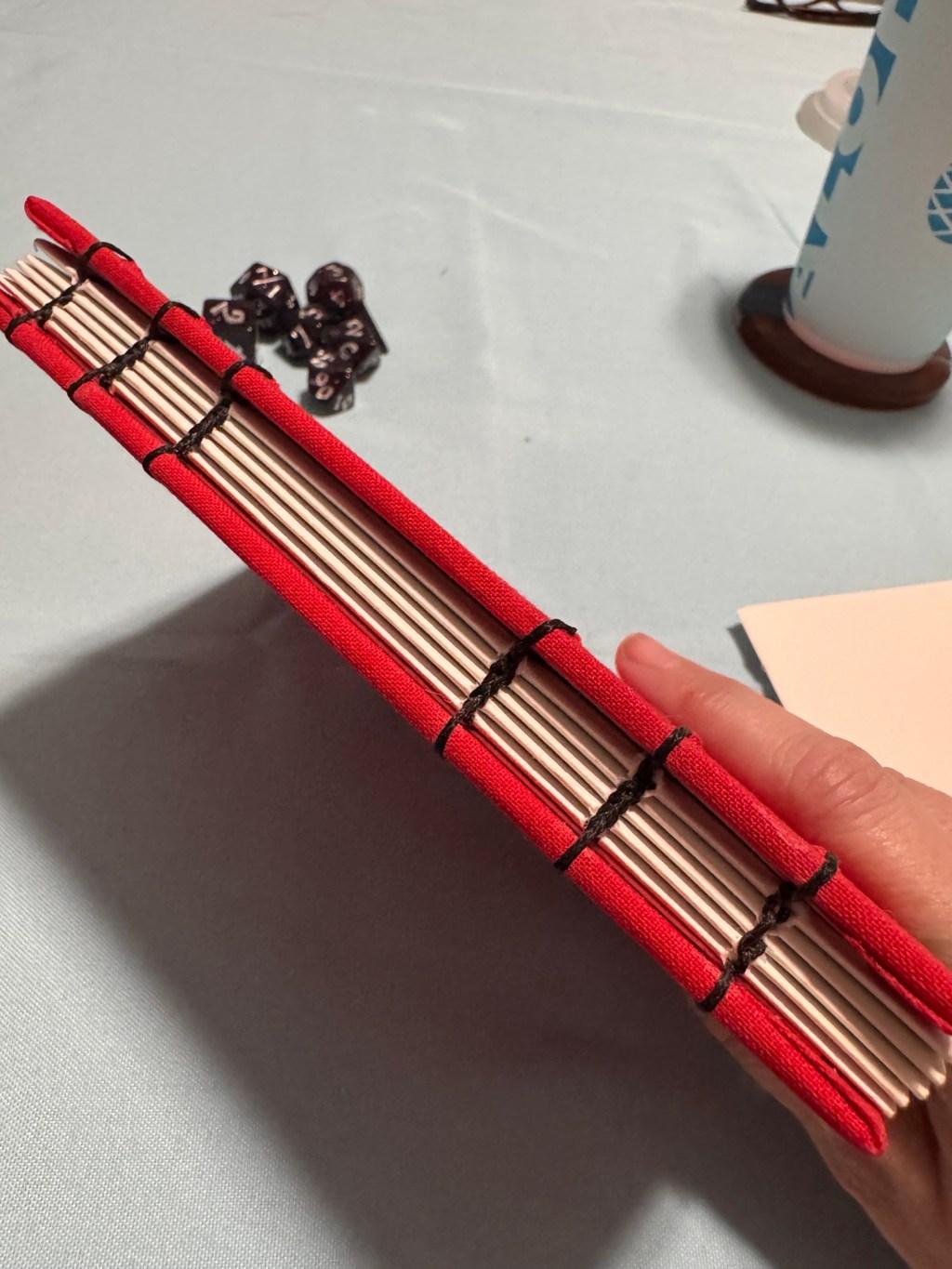
Things I learned making the third and fourth books I’ve ever made: I don’t have to get the thickest book board they make, middle of the road is fine, and fabric I have laying around the house is not ready to ‘use as is’ for the covers…
The thickness of the book board I started with meant that I had a heck of a time cutting straight and smooth edges. I did eventually upgrade from my generic box knife to an Olfa snap off knife, but next time I think I would start with thinner board.
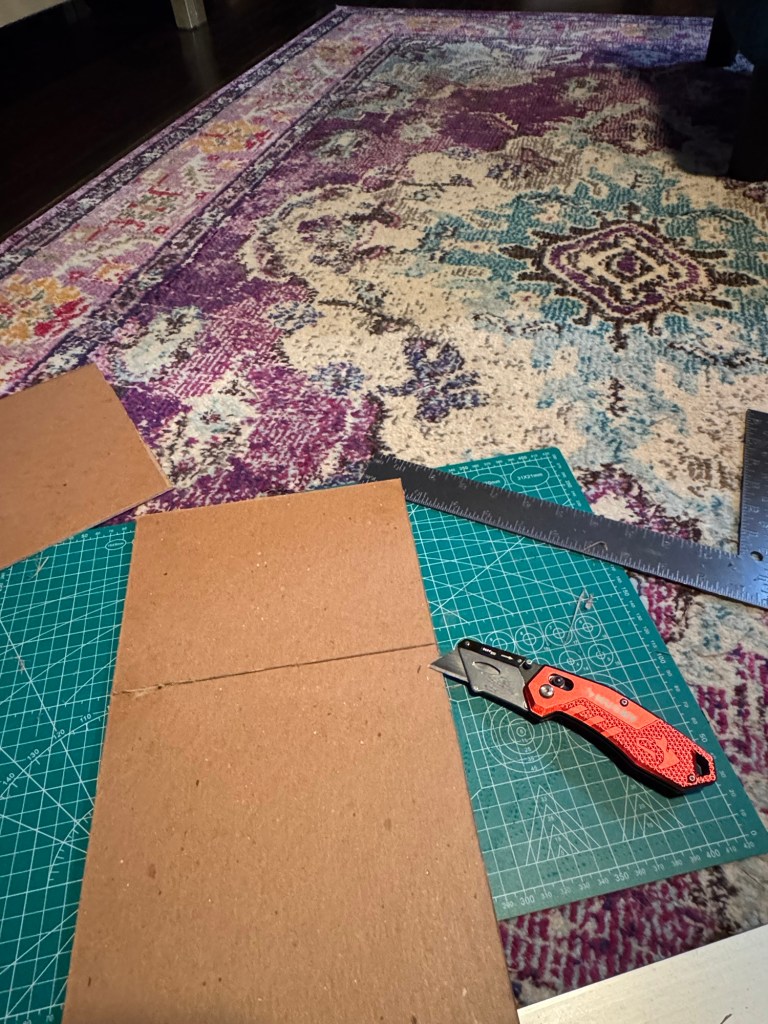
We are not gonna talk about the mess that was trying to use regular red fabric on the cover. Sufficed to say, you absolutely can use cotton for this purpose, but it requires stabilization before you glue it on. I ordered a roll of red bookcloth from Amazon, and cut it to size, clipping the corners so that it would wrap nicely.
I also recommend using some clamps and flat boards to compress the covers while they dry, to help prevent cupping from the glue. Even some heavier books or items stacked on top of the flat project book will help.
Make sure you’re using waxed thread for sewing the signatures (folded stacks of paper) together, it’ll keep the thread for sticking and tearing the pages while you’re working. For these books, I used waxed black linen thread, to incorporate Joachim’s heraldic colors.
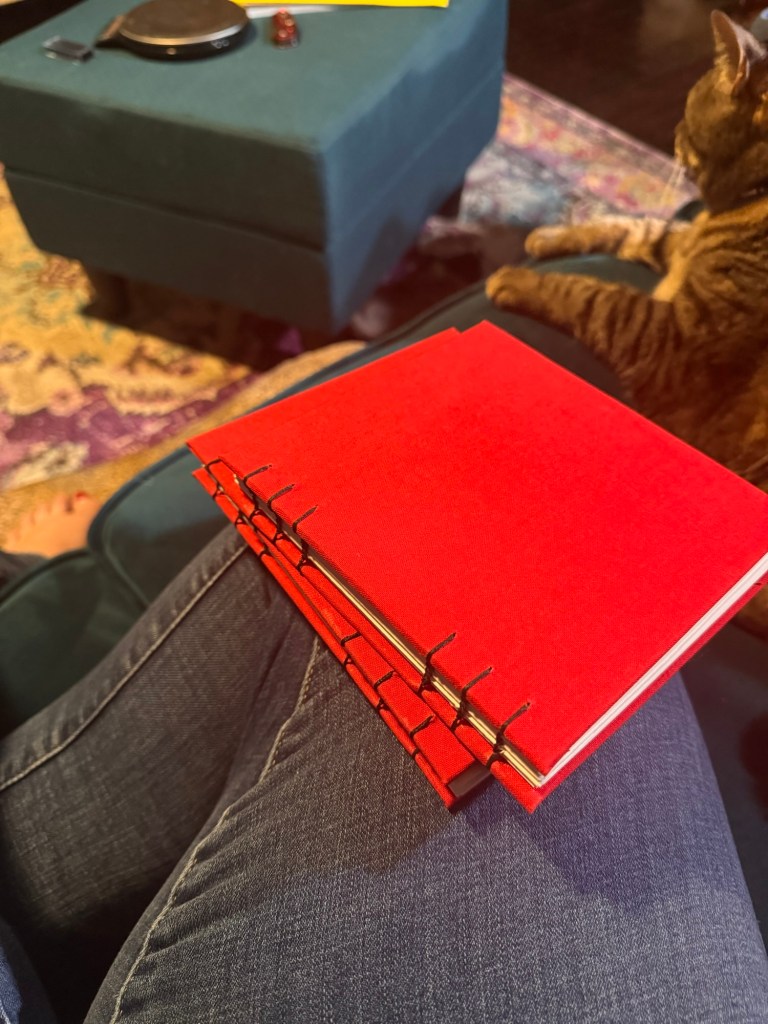
I watched more than a few YouTube videos, and used a curved needle to make chaining the stitches easier. In the end, I’m happy with how these turned out, and I definitely can’t wait to make some more.
 doodlebugcreates
Leave a comment