By Dyrfinna Tonnudottir
What is Brocade Tablet Weaving?
A weft-faced tablet woven band using a decorative gold or silver weft. The warp yarn is usually a thin, sturdy material like silk. (Karisto & Pasanen, 2021) The pattern cards are turned in one direction continuously, creating a solid background for the brocade to lay against. (Spies, 2000)
When was the Iron Age?
500 BC – 1300 AD
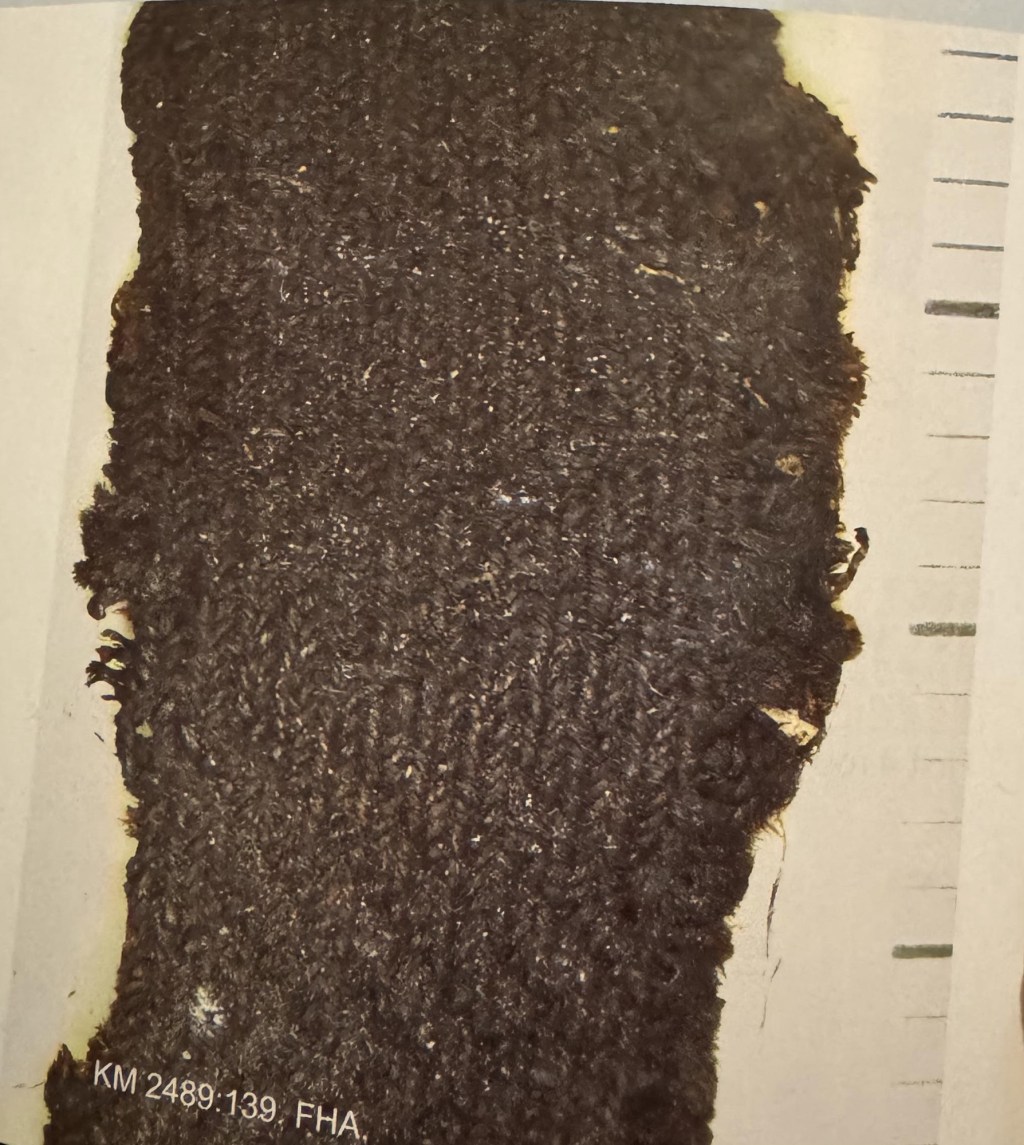
Where was the extant band found?
Silver brocade band found in a joint grave on the man’s side, near a belt. The warp consisted of red silk and the weft was a silver wrapped yarn. The band is 26 tablets in pattern, with no selvedge tablets. The band was 11 mm wide, with a density of approximately 95 yarns and 24 tablets per cm. The brocade was 30 weft yarns / cm. (Karisto & Pasanen, 2021)

Materials/Tools Used:
- 20/2 Silk Thread from Dixie Weaver
- Krenik Japan Thread #7
- DNC Metallic Embroidery Thread
- Silk wrapped stainless steel wire – manufacturer unknown
- Inkle Loom
- 4 shuttles of various size
- BBQ Skewer

Left: Recreated band from Tablet Woven Treasures.
Methodology: I used the above materials in a variety of methods to determine the version of replication that I liked best. See notes on individual pictures for method details.
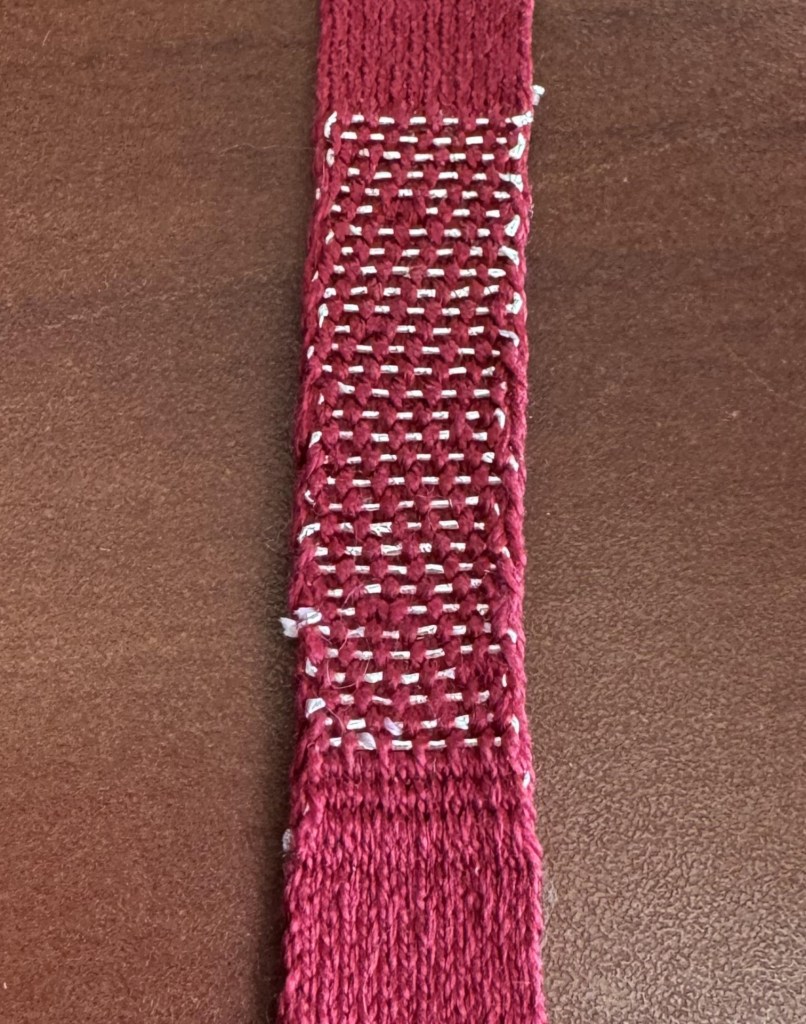
Method One:
Single strand of Krenik Japan Thread #7 with double picked brocade shed.
Result: The pattern seems lost with the double picks for the brocade shed.
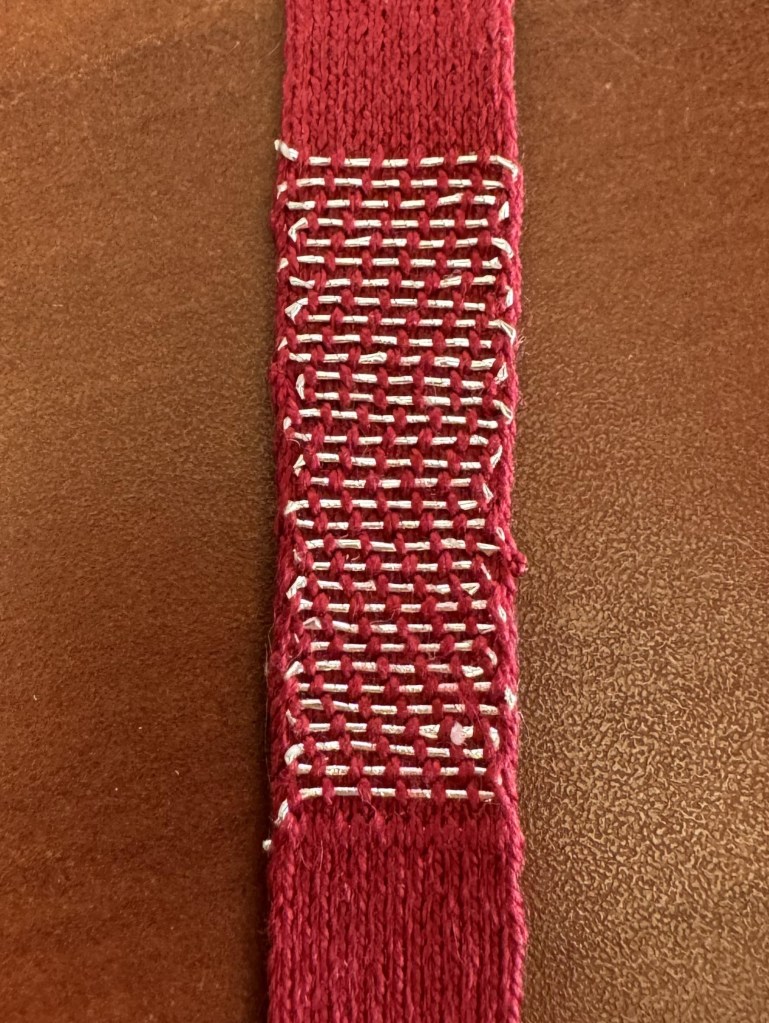
Method Two:
Single strand of Krenik Japan Thread #7 with single picked brocade shed.
Result: Better, but not as striking as the one replicated in the book
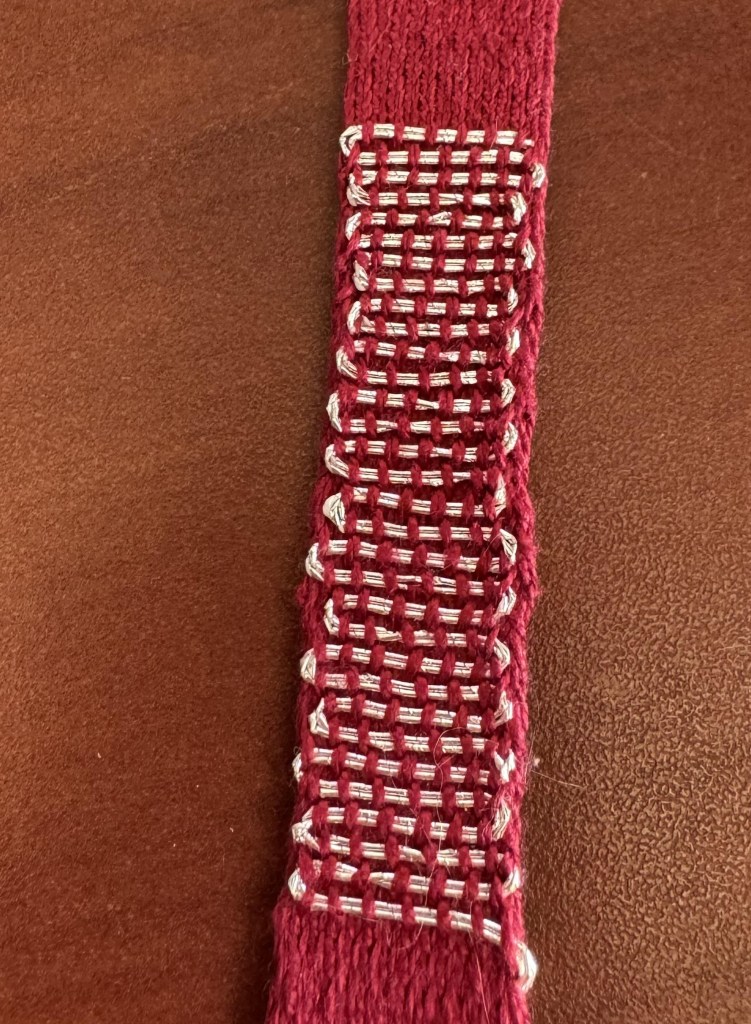
Method Three:
Double strand of Krenik Japan Thread #7 with single pick brocade shed.
Result: This looked sloppy, especially since the extant band doesn’t have selvedges.
Method Four:
Two shuttles of Krenik Japan Thread #7 were woven cross weft in a single pick brocade shed.
Result: This was my favorite of all methods, as it kept the width relatively equal, and didn’t look as sloppy as the others.
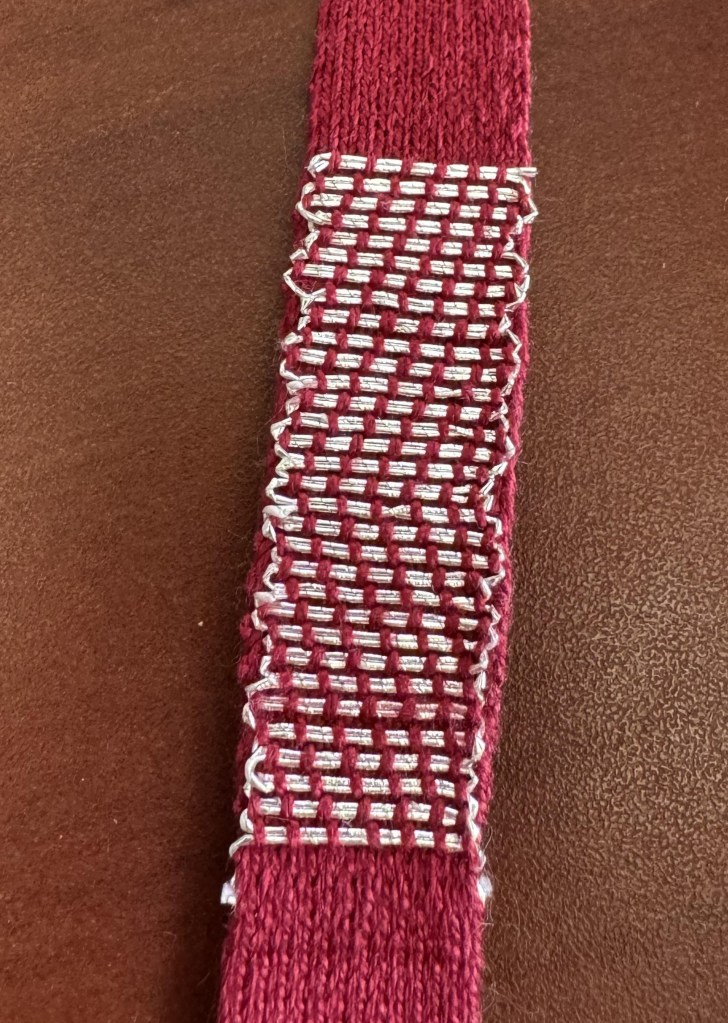

Method Five:
Double strand of DNC Embroidery Floss in a single pick brocade shed.
Result: This was much more flexible of a band than the previous method and would make excellent trim as it wouldn’t tarnish.
Method Six:
Double strand silk wrapped stainless steel in a single pick brocade shed.
Result: This did not pop as much as the metallic threads did.

References
Karisto, M., & Pasanen, M. (2021). Tablet-woven Treasures: Archaeological Bands from the Finnish Iron Age. Tallinna Raamatutrukikoda OU: Mytholigia Fennica.
Spies, N. (2000). Ecclesiastical Pomp & Aristocratic Circumstance. Jarretsville, MD: Arelate Studio.
 doodlebugcreates
Leave a comment